
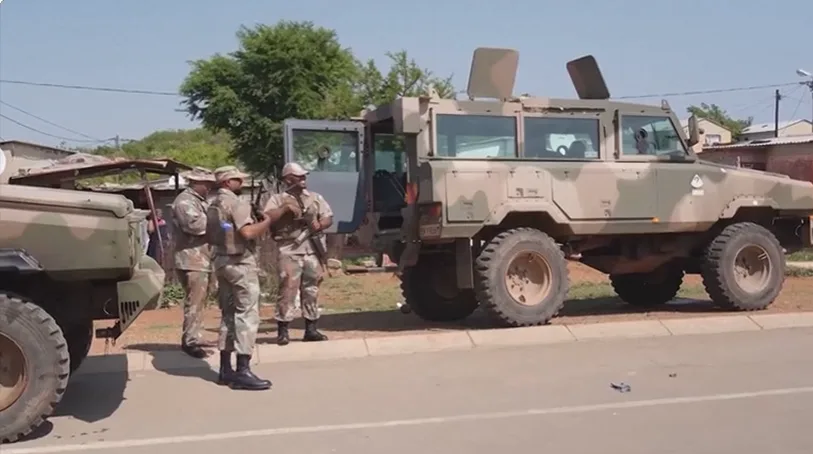

South African police have launched a manhunt after three separate shootings in Gauteng and the Western Cape left more than 30 people dead over the weekend, according to police accounts reported by CNN.
The attacks, in Wedela outside Johannesburg, Lwandle near Cape Town and Khayelitsha, have renewed attention on the danger faced by people in neighbourhood venues and public spaces — and on the gap between a national decline in some violent-crime figures and the daily reality of communities living with armed violence.
A night of violence across two provinces
The largest attack took place in Wedela, in the West Rand District outside Johannesburg. Police said 17 people were killed and 15 injured after gunmen opened fire at a tavern on Saturday evening. Investigators said patrons had been drinking inside and outside when the assailants arrived, first shooting people outside and then continuing inside the venue.
Police said eight unidentified men were involved. The attackers were reported to have fled in two vehicles after taking some patrons’ mobile phones. No arrests had been announced at the time of reporting, and the investigation remains active.
Hours later, 10 people were killed at an entertainment venue in Lwandle, a township in the Western Cape. Police said gunmen entered early on Sunday and fired at people inside. Five victims died at the scene and five later died in hospital.
A provincial police commissioner said a business dispute was one possible line of inquiry in the Lwandle case, but stressed that detectives were still investigating. That distinction matters: in the immediate aftermath of an attack, early accounts can point investigators in several directions before evidence establishes a motive.
The third incident occurred in Khayelitsha, also in the Western Cape. Police are investigating the deaths of four people after a shooting on Saturday evening. Three men were found with gunshot wounds at the scene, including two in a vehicle. A fourth victim later died after being taken to a medical facility. Police had not identified a suspect or established a motive.
Investigations continue
The three cases are separate, but together they show how quickly a single weekend can become a national tragedy. The reports describe different locations and circumstances, and police have not linked the shootings.
For relatives, friends and residents, the immediate concern is accountability: identifying the people responsible, preserving evidence, understanding whether the attacks were targeted, and making sure witnesses can safely come forward. For communities, the impact often lasts long after the crime-scene tape is removed. A venue that had been a place to socialise can become a reminder of trauma; neighbours may feel they have to change how they travel, work or gather.
The police response will be judged not only on arrests but on whether the investigations produce clear answers that can withstand scrutiny in court. That is particularly important in cases involving multiple victims, where misinformation and rumour can spread rapidly online before investigators have completed basic fact-finding.
National figures show a difficult contradiction
South Africa’s most recent official quarterly crime statistics, covering January to March 2026, reported a fall in recorded murder and contact crimes compared with the same period a year earlier. The government said 5,181 people were murdered during that quarter — an average of 58 a day.
Those figures show why both parts of the story are true at once. A reduction in the national total is meaningful, but it does not make the level of violence acceptable or make communities immediately feel safe. The same official release said Gauteng, the Western Cape, Eastern Cape and KwaZulu-Natal accounted for more than four-fifths of the country’s murders during the period.
Officials have pointed to organised crime, extortion, gang activity and the availability of firearms as serious challenges. The government has also said it wants stronger intelligence work, more effective investigations and closer cooperation between police and local communities.
But statistics are only one measure. The human cost is felt in hospitals, households, workplaces and neighbourhood businesses. Each death leaves families dealing with loss, while survivors of shootings can face long recoveries and lasting psychological harm.
What happens next
Police are continuing their searches for suspects in the Wedela, Lwandle and Khayelitsha cases. The facts known so far come from initial police accounts and will be tested as investigators gather statements, forensic evidence and any available footage.
This is a developing story. JAM News will update it when police provide confirmed information on arrests, suspected motives or the identities of the victims.
Sources: CNN reporting on the shootings; South African government fourth-quarter crime statistics, published 22 May 2026.